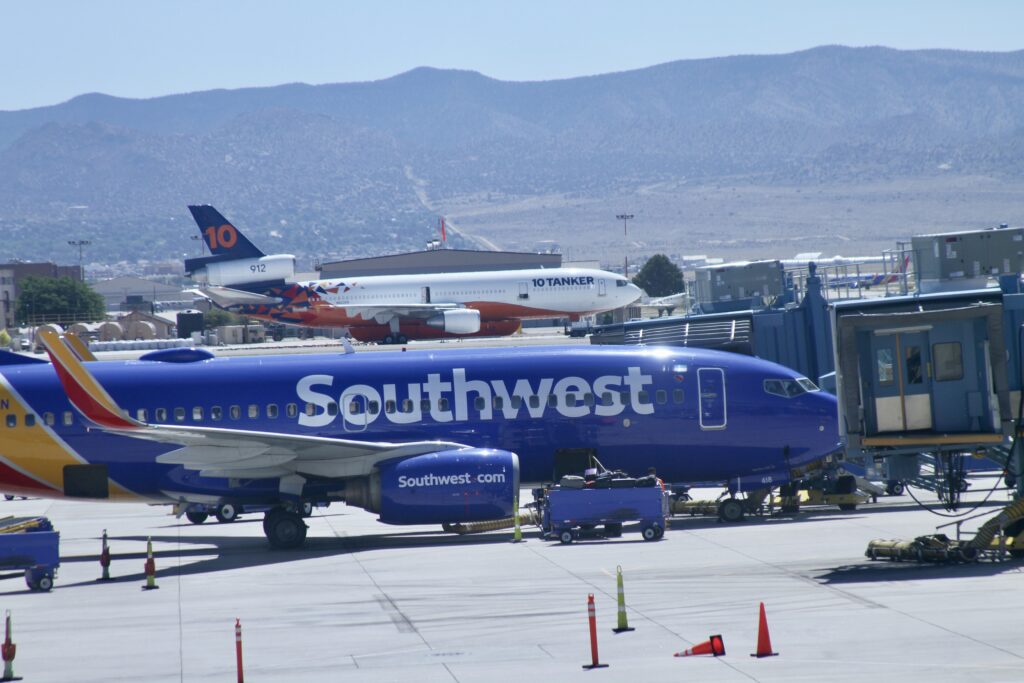
Aftermath Of FAA Nationwide Ground Stop for all USA flights.
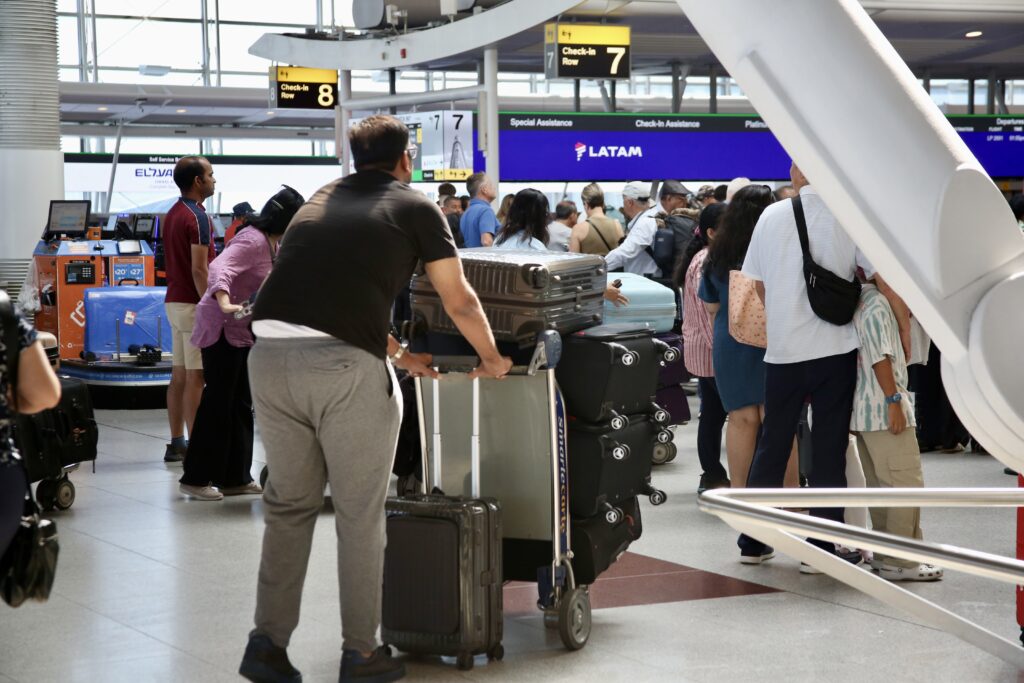
Passengers At JFK international airport-New York.
Credit: Niyi Fote/Thenews2
The nationwide ground stop enacted by the Federal Aviation Administration (FAA) triggered an unprecedented cascade of logistical challenges across United States airports. Initiated due to a severe telecommunications and router instability issue that affected regional air traffic control centers, the sudden halt suspended all departing flights while roughly 3,500 aircraft remained airborne. Although the emergency stop was lifted after several hours once safety was assured, the temporary freeze shattered the tightly synchronized clockwork of commercial aviation, leaving terminals packed with stranded passengers and crews displaced far from their home bases.
The immediate aftermath manifested as a multi-day operational crisis as airlines struggled to reset their schedules. Because modern commercial planes continuously cycle through complex, multi-leg itineraries spanning multiple cities, a disruption of this magnitude does not simply pause operations—it creates a multiplying deficit of aircraft and personnel.
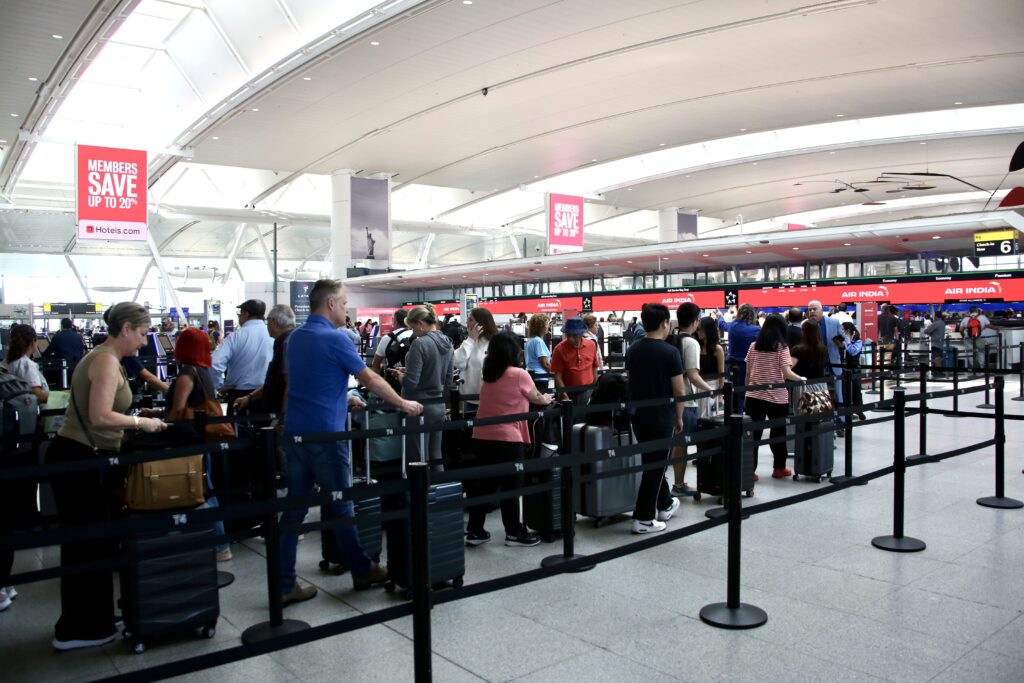
Passengers At JFK international airport-New York.
Credit: Niyi Fote/Thenews2
Major hubs saw thousands of cancellations and extensive delays spilling well into the weekend. Passengers faced jammed customer service lines, overwhelmed mobile booking apps, and prolonged waits for alternative seats, while international connections and regional feeds experienced severe ripple effects globally.
In response to the chaos, federal officials and airline executives faced immense scrutiny regarding the vulnerability of national infrastructure.
Transportation Secretary Sean Duffy and FAA leadership pointed to aging legacy components colliding with modern high-speed network upgrades, noting that a malfunctioning router had flooded the system with automated traffic requests and triggered widespread instability. Investigations quickly zeroed in on whether equipment failure or contractor error was to blame, reviving fierce political and public debates over the urgent need to modernize the nation’s air traffic control framework.
For travelers, navigating consumer rights in the wake of the shutdown proved frustrating and complex. Because the ground stop was ordered by federal regulators under extraordinary safety circumstances rather than airline negligence, carriers were generally not held liable for secondary expenses like hotels or meals, though federal regulations required them to offer full refunds for canceled trips if passengers chose not to rebook. Airlines issued broad travel waivers to help cushion the blow, yet thousands of travelers still endured missed milestones, disrupted holiday or weekend plans, and scrambled connections.
As normalization efforts progressed, aviation authorities worked around the clock to clear the massive backlog and stabilize regional corridors.
While full recovery took days—requiring extra flights and strategic schedule adjustments to clear out stranded crowds—the event served as a stark reminder of the fragility inherent in interconnected transit systems. The crisis ultimately underscored both the efficiency of the safety protocols that kept airborne planes secure and the profound economic vulnerability that occurs when America’s airspace is forced to stand still.
Niyi Fote/Thenews2