Trilateral Meeting of the Leaders of World’s three largest nuclear powers-Donald J. Trump, Putin, and Xi Jinping-In China.
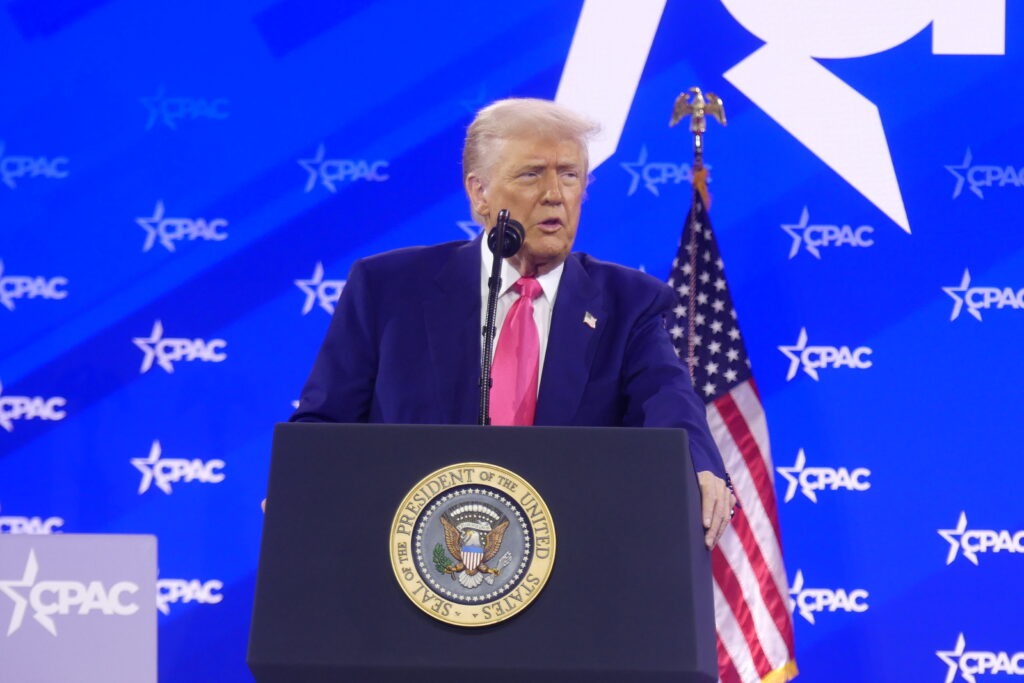
US President Donald J. Trump.
Photo: Julia Mineeva/Thenews2
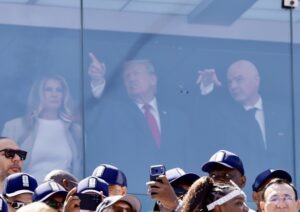
The U.S. President Donald J. Trump, Russian President Vladimir Putin, and Chinese President Xi Jinping, held a historic first-ever trilateral summit on the sidelines of the Asia-Pacific Economic Cooperation (APEC) conference in Shenzhen, China. Lasting roughly an hour and a half, the gathering marked an unprecedented display of direct diplomacy among the leaders of the world’s three largest nuclear powers. Trump hailed the occasion as “making history” and warmly referred to Putin as “my friend,” while Xi emphasized that positive interaction among the three nations was “not optional, but a must”.
Nuclear arms control served as a central pillar of the discussions, taking place months after the February expiration of the New START treaty between Washington and Moscow. Trump argued that the United States, Russia, and China were “uniquely positioned” to negotiate reductions in their nuclear stockpiles and lower the risk of atomic conflict, repeating his push to bring Beijing into a three-way arms control framework. Xi echoed the urgency of preventing nuclear war, calling for nuclear weapons to be “completely prohibited and thoroughly destroyed,” though the talks concluded without a binding new arms agreement.
Geopolitical conflicts—most notably the ongoing war in Ukraine and escalating tensions involving Iran—also featured prominently during the closed-door session. Putin stated that the three powers shared “many converging interests” in resolving global conflicts and noted that he had recounted his perspective on the origins of the Ukraine crisis to Trump and Xi. Despite these exchanges, the summit produced no tangible diplomatic breakthrough or roadmap for ending the fighting in Ukraine, which was notably omitted from the leaders’ final communique.
At the conclusion of the meeting, the three leaders issued a four-point joint “peace declaration” that targeted international institutions and affirmed broad strategic principles. The statement reaffirmed that “a nuclear war cannot be won and must never be fought,” pledged continued dialogue on non-proliferation, and called for sweeping reforms to the United Nations. Crucially, the declaration also demanded “respect for immunities of state officials” from the International Criminal Court (ICC)—which has an active war crimes arrest warrant against Putin—after Trump openly criticized the court as “out of control”.
While Trump later praised the summit as a “12 on a scale of zero to 10” and Chinese officials described it as “constructive and very productive,” outside observers viewed the outcome with skepticism. Foreign policy analysts noted that despite the historic optics of the three leaders sitting at the same table, the summit yielded few concrete policy concessions on trade, technology disputes, or active military conflicts. Instead, the Shenzhen meeting functioned largely as a high-profile symbolic gesture signaling an intent to maintain top-level communication amid deep structural rivalries.
Niyi Fote/Thenews2